Research
Explainers and project notes from our work on robots that map, plan and learn. Every code example is tested before it is published.
SLAM and path planning
-
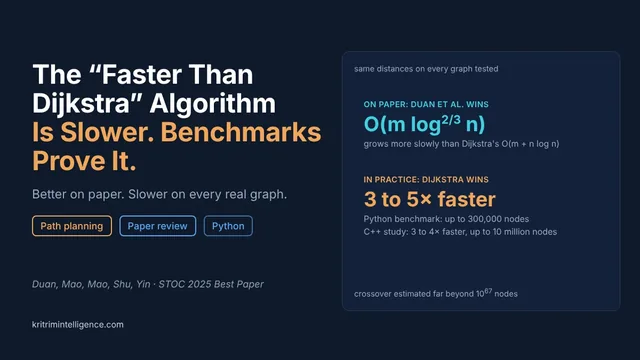
The "Faster Than Dijkstra" Algorithm Is Slower Than Dijkstra. The Benchmarks Prove It.
Headlines said a 2025 algorithm beat Dijkstra. On paper it does. In Python and C++ benchmarks, Dijkstra was 3 to 5 times faster. Here is why both are true.
-
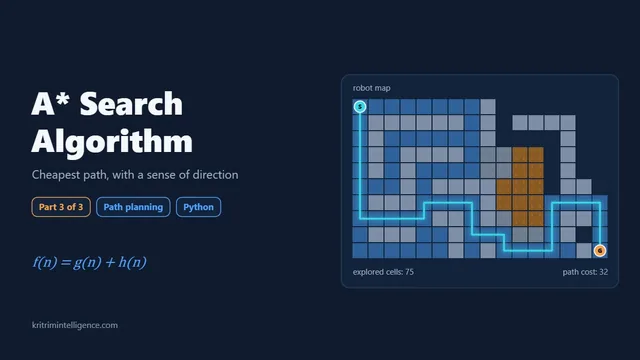
A* Search Algorithm Explained: f = g + h, Heuristics and Python Code
A* search explained: how f = g + h works, admissible heuristics, weighted A*, a tested Python example and a TurtleBot3 running A* in ROS 2.
-
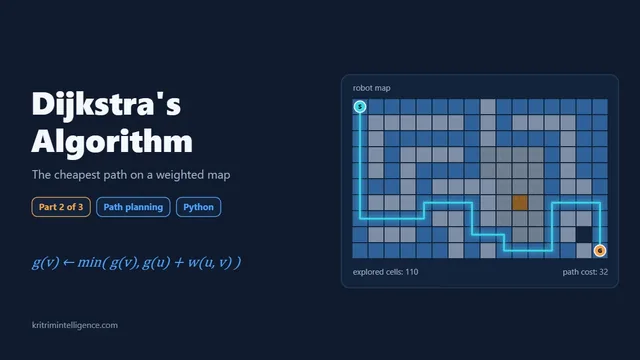
Dijkstra's Algorithm Explained: Cheapest Paths for Robots, with Python Code
Dijkstra's algorithm explained step by step: priority queues, edge relaxation, why it finds the cheapest path, and a tested Python example on a robot grid map.
-
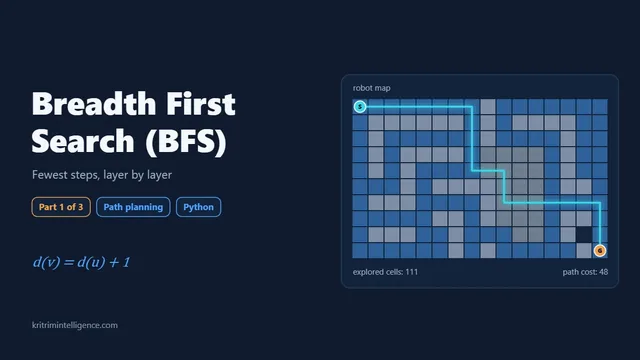
Breadth First Search (BFS) Explained: Shortest Paths for Robots, with Python Code
Breadth first search explained from the ground up: how the queue works, why BFS finds the fewest steps path, and a tested Python example on a robot grid map.
-
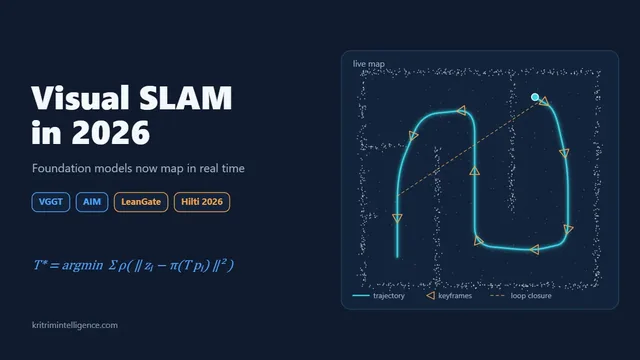
Visual SLAM in 2026: Foundation Models Now Map in Real Time
The biggest visual SLAM updates of 2026: VGGT-SLAM 2.0, AIM-SLAM, LeanGate and the Hilti Trimble challenge, and what they mean for drones that fly without GPS.
Deep learning
-
Convolution Neural Network (CNN)
Introduction-
-
Deep Learning: An Overview
Deep Learning is a subset of machine learning, a branch of computer science focused on mimicking the human brain. It involves using artificial neural networks
Reinforcement learning
-
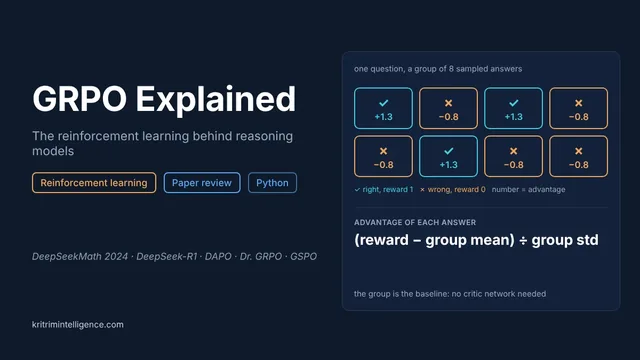
GRPO Explained: The Reinforcement Learning Behind Reasoning Models, with Python Code
GRPO explained: how it trains reasoning models without a critic, the two hidden biases in its loss, the 2026 fixes like DAPO and Dr. GRPO, and Python code.
-
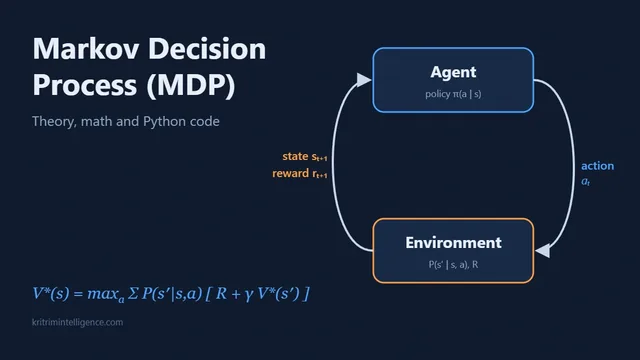
Markov Decision Process (MDP) Explained: Theory, Math and Python Code
Learn Markov decision processes step by step: the Markov property, Bellman equations, value iteration and policy iteration, with a full Python grid world example.
-
Reinforcement Learning
Reinforcement Learning (RL) is a specialized area of Machine Learning (ML) that focuses on training software agents using a system of rewards and penalties.

Robotics and robot learning
-
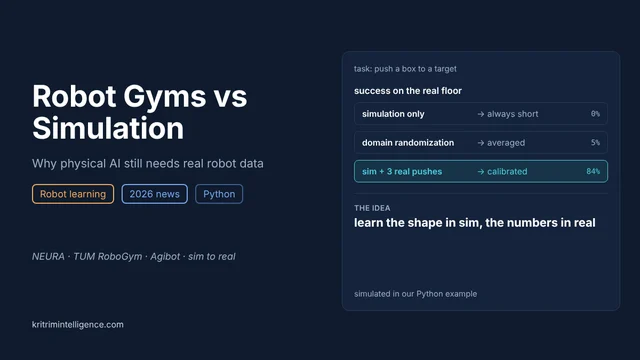
Robot Gyms vs Simulation: Why Physical AI Still Needs Real Robot Data, with Python Code
Robot gyms vs simulation: why NEURA and China build real robot training centres, the sim to real gap, domain randomization, and a Python demo.
-
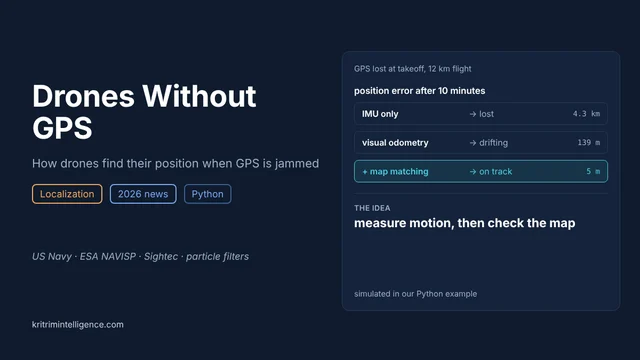
How Drones Fly Without GPS: IMU Drift, Visual Odometry and Map Matching, with Python Code
How drones fly without GPS: why an IMU drifts, how visual odometry and map matching fix it, this month's Navy and ESA news, and a Python particle filter.
-
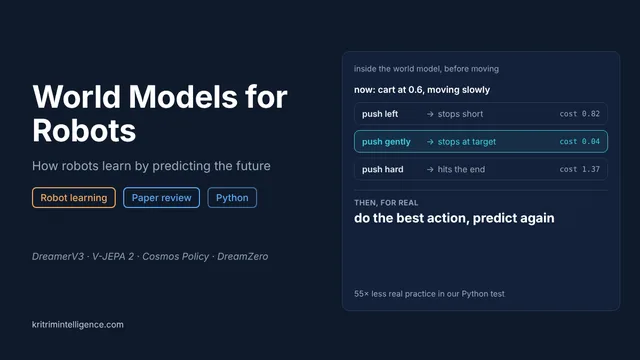
World Models for Robots Explained: How Robots Learn by Predicting the Future, with Python Code
World models for robots explained: how robots predict what happens next, DreamZero, V-JEPA 2, Cosmos Policy, and Python code needing 55x less practice.
-
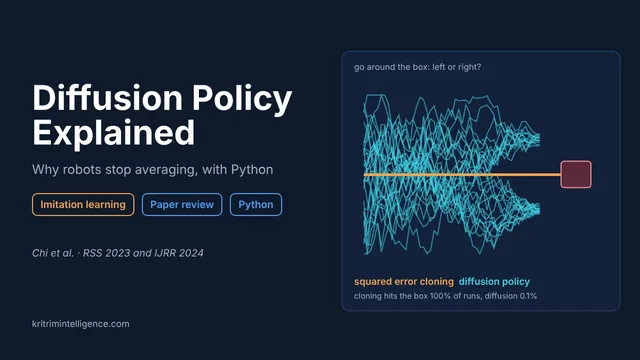
Diffusion Policy Explained: How Robots Learn Multimodal Actions, with Python Code
Diffusion Policy explained from the Chi et al. paper: why behavior cloning averages actions, how denoising fixes it, the results, and tested Python code.
-
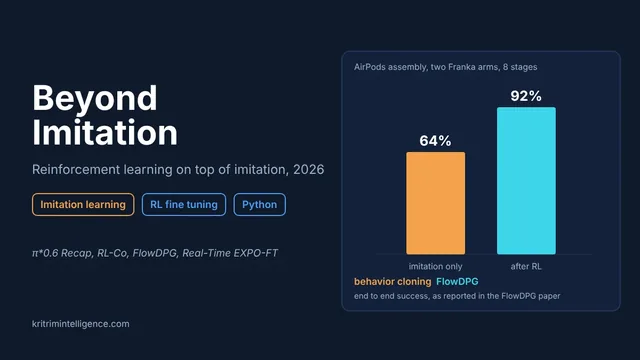
Beyond Imitation: How Reinforcement Learning Is Improving Robot Policies in 2026
Why 2026 robot policies are trained by imitation, then improved with reinforcement learning: π*0.6 Recap, RL-Co, FlowDPG and EXPO-FT, with Python code.
-
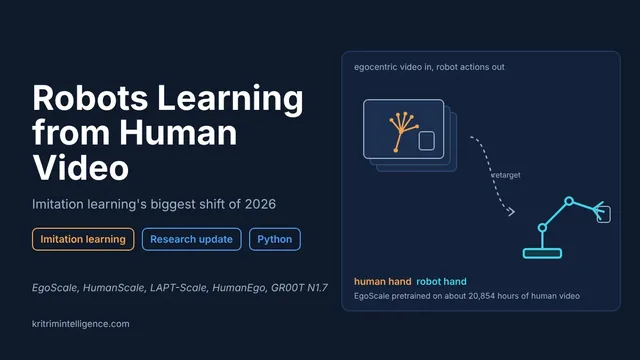
Robots Learning From Human Video: The Biggest Imitation Learning Shift of 2026
How robots learn from human video in 2026: EgoScale's scaling law, HumanScale, LAPT-Scale, HumanEgo and GR00T N1.7, explained with a small Python check.
-
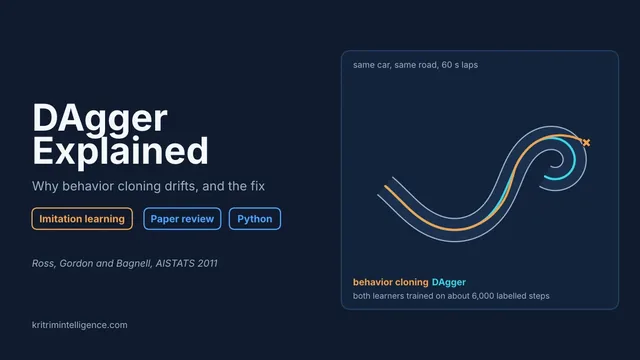
DAgger Explained: How Dataset Aggregation Fixes Behavior Cloning, with Python Code
DAgger explained from the 2011 Ross, Gordon and Bagnell paper: why behavior cloning drifts, how dataset aggregation fixes it, the theory, and tested Python code.
-
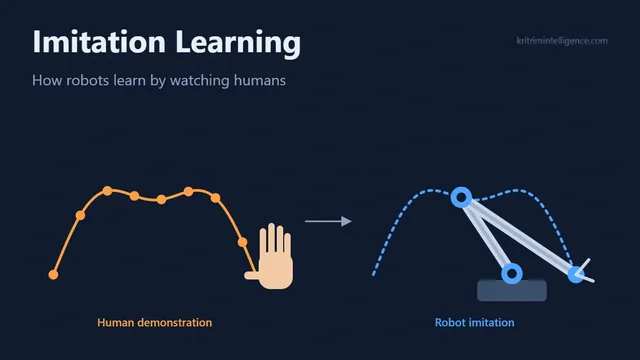
Imitation Learning Explained: How Robots Learn by Watching Humans
Learn what imitation learning is, how behavior cloning and DAgger work, why errors compound, and how ACT and Diffusion Policy teach robots from demonstrations.
Veg and aerial robotics
-
Veg Drone: SLAM-Based Surveillance Quadcopter with Onboard Vision and Fault Recovery
Meet Veg, a self-reliant quadcopter that flies without GPS, detects people and faces in real-time, and knows how to land safely even when a motor fails.
-
Aerial Robotics & Drones
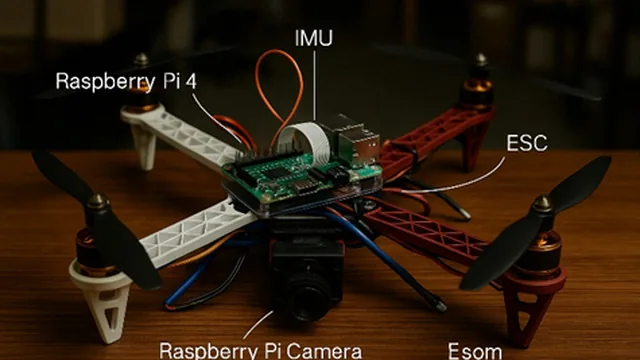
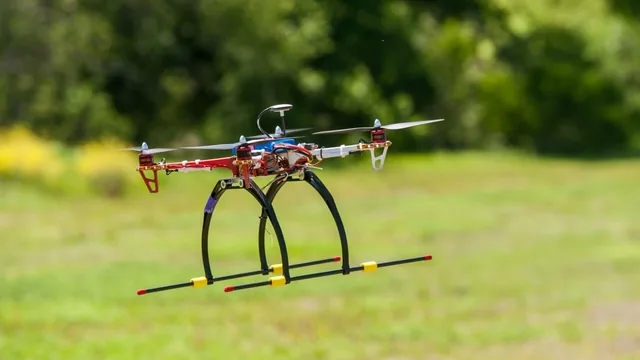
How quadcopters fly and navigate without GPS: rotor layout, 6-DoF movement, UAV components and SLAM mapping explained step by step.
Data engineering white papers
Papers from our data engineering work. TFuzzyScore, the NLP paper, matches noisy text to known entities, and the same idea helps a robot map spoken commands to actions.
-
TFuzzyScore: A Hybrid Similarity Metric Combining TF-IDF and Fuzzy Logic for Entity Mapping in Structured Text
TFuzzyScore blends TF-IDF and fuzzy string matching to map messy text to clean entities without labelled data, for data cleaning and robot voice commands.
-
Extending Power BI Usage Metrics Beyond 30 Days Using Azure and Databricks
A scalable Azure Databricks and ADLS pipeline that keeps Power BI usage metrics beyond the 30 day limit, with automated refresh and a reliable history.
-
Optimizing Null Checks and Multi-Granularity Deduplication in Scalable SQL Pipelines
How to unify multi granularity passes, check nulls and deduplicate with EXCEPT ALL in Spark SQL and Delta Lake pipelines while cutting shuffle overhead.